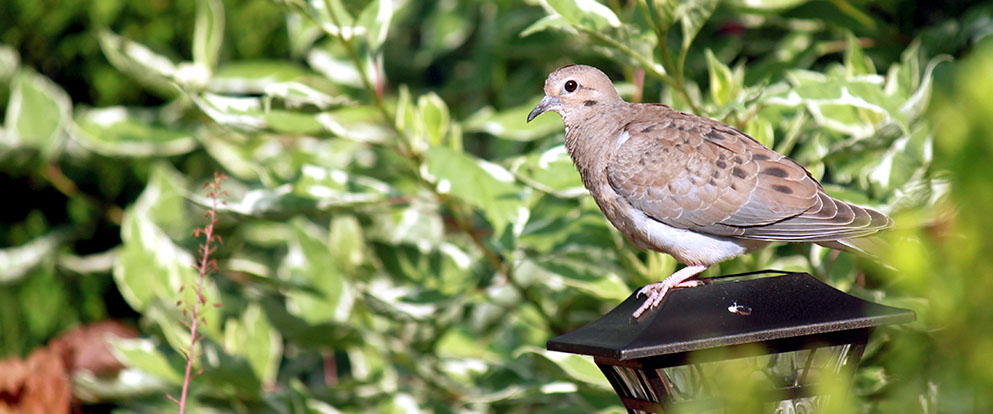
Mourning Doves are gentle birds that are commonly found in neighborhoods and open fields across the United States. Attracting Mourning Doves is simple to do, and they will often nest near your home.
The easily recognizable "coo" sound they make during their nesting season is a relaxing addition to a front or back yard. Sometimes mistaken for an owls "hoot", once you know how to recognize the Mourning Doves' calls you'll be able to narrow down where these pretty birds are nesting.
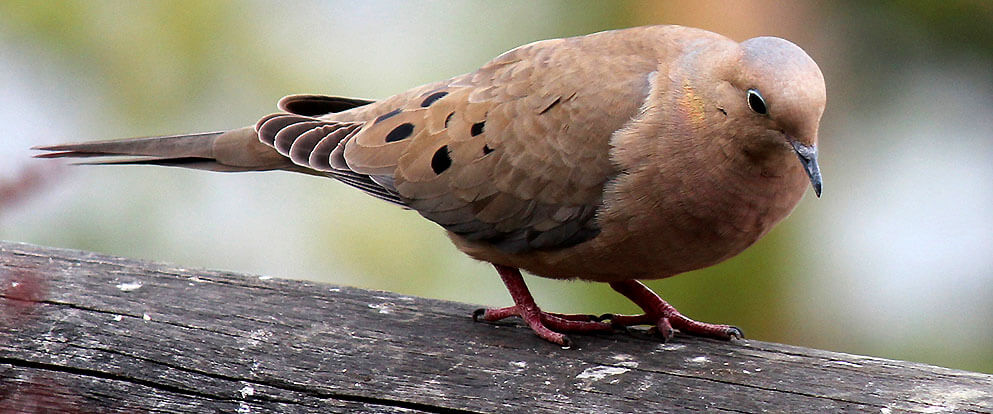
Mourning Doves are not as pudgy as pigeons, and have a slender body and a long pointed tail. Their black spots on the wings are distinctive, and it’s common to see the Mourning Doves resting in a wide variety of locations.
Although they walk slowly on the ground and often peek out from under trees and bushes, Mourning Doves are strong flyers.
When they take off their wings make a whistling sound, and they tend to fly in a straight path. This tendency often makes them targets for hunters, as Mourning Doves are the most commonly hunted game bird in the United States.
Learn more about how Mourning Doves live
When Mourning Doves make their nest, it is typically at least 5 feet up in a tree, and will often be placed on a branch as high as 25 feet high. They look for a safe place, and will quickly abandon the nest and any young in it if they feel threatened. It’s important to keep your distance when observing Mourning Dove nests.
To encourage Mourning Doves to nest nearby where you can watch without disturbing them, you can mount a board to a tree. They will sometimes make a nest right on top of your nesting shelf (and if they don't, a robin probably will).
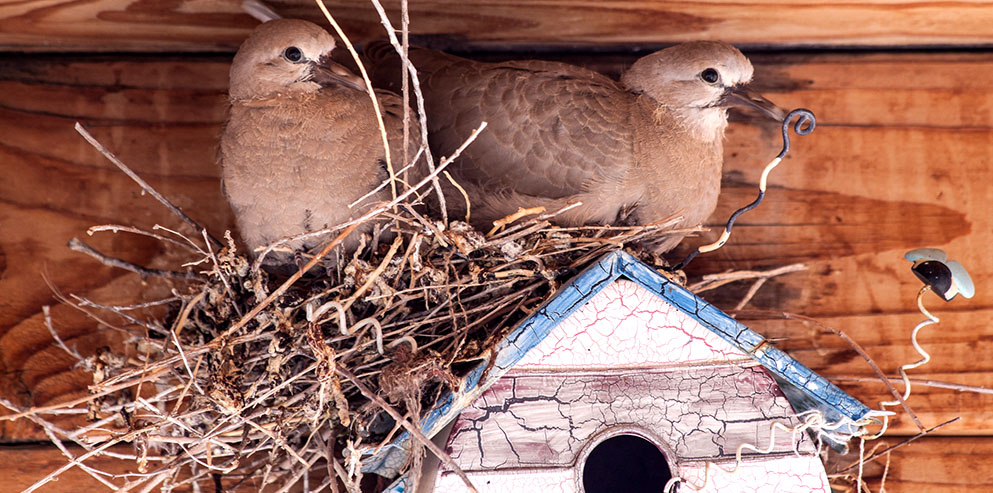 The nest of a Mourning Dove is most often made up of a loosely held together mixture of grass, pine needles, sticks and twigs that the female weaves with materials provided by the male. It can take a few days to make the nest, and then the female settles into her nest.
While the nest may not be as heavy duty as other birds' nests, if placed in a good location it's common for Mourning Doves to re-use the nest for multiple broods. The female only has a couple of eggs in each clutch, but may have as many as six broods each year. This extended breeding season helps keep the population of Mourning Doves stable in the face of consistent hunting each year.
After she lays the two eggs, the female and her mate take turns incubating the eggs for about two weeks. After they hatch, the nestlings will need another two weeks or so with their parents until they are ready to leave the nest on their own. These juvenile birds are smaller than adults and tend to have darker coloring.
Learn what Mourning Doves eat
After nesting season, Mourning Doves are often found in large flocks near fresh water and food. They are very easy-going when it comes to feeding with other birds, and will even dine with squirrels. These ground-feeding birds are fun to watch and easy to keep around if you provide food and water.
If Mourning Doves are ground feeders, you may wonder why they are so often seen perching on telephone poles or other high locations. Mourning Doves eat corn, millet and most often the seeds found in grasses, flowers and of course bird feeders. They then fly off to higher ground to let the food digest.
Platform bird feeders are about the only feeders that Mourning Doves are comfortable on. These large, open feeders are perfect for Mourning Doves. They will occasionally eat at smaller feeders but never stay long. They will look for open places to feed that may have trees or shrubs nearby for protection, so place your bird feeder where it gives you the best chance to attract these gentle birds.